
In Evansville, Indiana, U.S. Highway 41 is a key north-south highway that intersects with Washington Avenue, another major local road. From 2015 to 2017, the signalised intersection had seen 15 severe and incapacitating injuries, 15 non-severe injuries, and 105 property-damage-only crashes. The Indiana Department of Transportation (INDOT) intervened to reduce crashes and improve mobility.
INDOT installed a boulevard left-turn on March 25, 2025, the first of its kind designed and constructed in the State of Indiana. This type of intersection splits a traditional left turn into two stages:
- Vehicles first drive straight through the main intersection.
- Then make a U-turn further downstream, returning to the main intersection to make a right turn back onto their intended route.
By removing the left-turn movement from the main intersection, traffic volumes and required signal phases are reduced. Boulevard left-turn intersections have only 20 conflict points, compared to traditional intersections, which have 32 (Source: INDOT, https://www.in.gov/indot/traffic-engineering/boulevard-left-turns/).
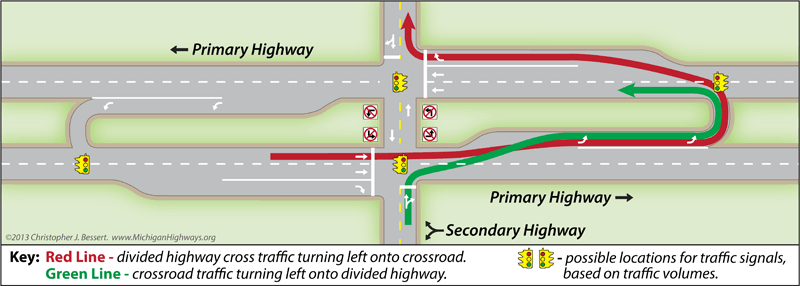
Example of a boulevard turn, Michigan (Source: Michigan Highways, https://michiganhighways.org/indepth/michigan_left.html)
After installing the boulevard left turns, INDOT wanted to understand the impact on traffic (including cars and trucks) travelling along U.S. Highway 41 to see if there was a positive change in driver behaviour, improvement in intersection efficiency, and a reduction in crashes.
Comparing the two weeks before the boulevard left turn intersection opened with the two weeks after, Path Analysis revealed efficiency improvements on the approach to the signalised intersection:
- Increased from 17.15mph to 26.54mph (or 27.6km/h to 42.7km/h) for northbound traffic
- Increased from 26.21mph to 31.43mph (or 42.2km/h to 50.6km/h) for southbound traffic
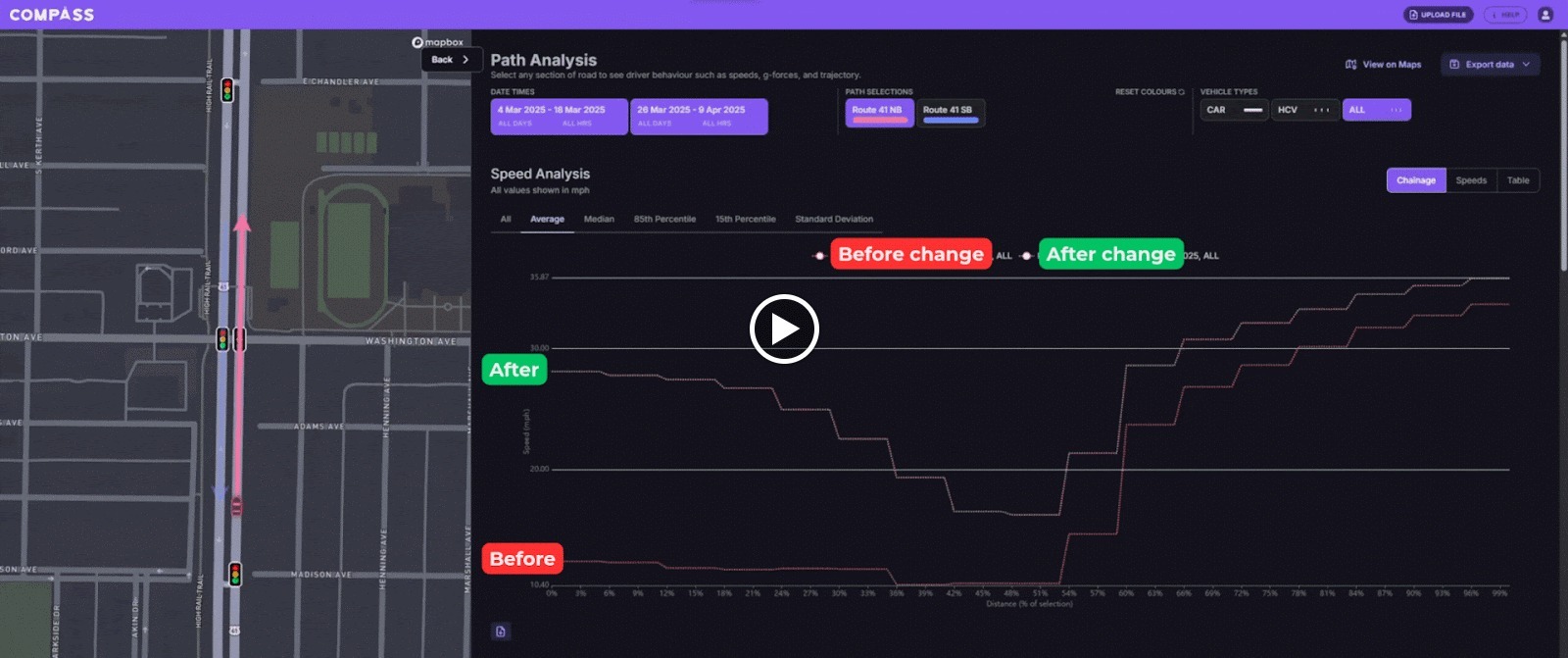
Speed Bins also reflected these changes, showing that after the change, traffic was more free-flowing through the intersection.

Trajectory analysis showed that before the change, 23% of northbound traffic made no stops, while 76% made one or two stops (see below table). After the signal change, 72% of northbound trips made no stops, and only 28% made one or two stops (see below table). For southbound traffic, trips that did not stop increased from 48% to 80%, and those making one or two stops decreased from 51% to 19% (see below table). This shows that more traffic is flowing through the main intersection, making it less likely to experience split failures* and congestion, thereby reducing driver frustration and rear-end collisions.
*A split failures occur when a signal does not provide enough green time to allow previously stopped vehicles to continue through the intersection.
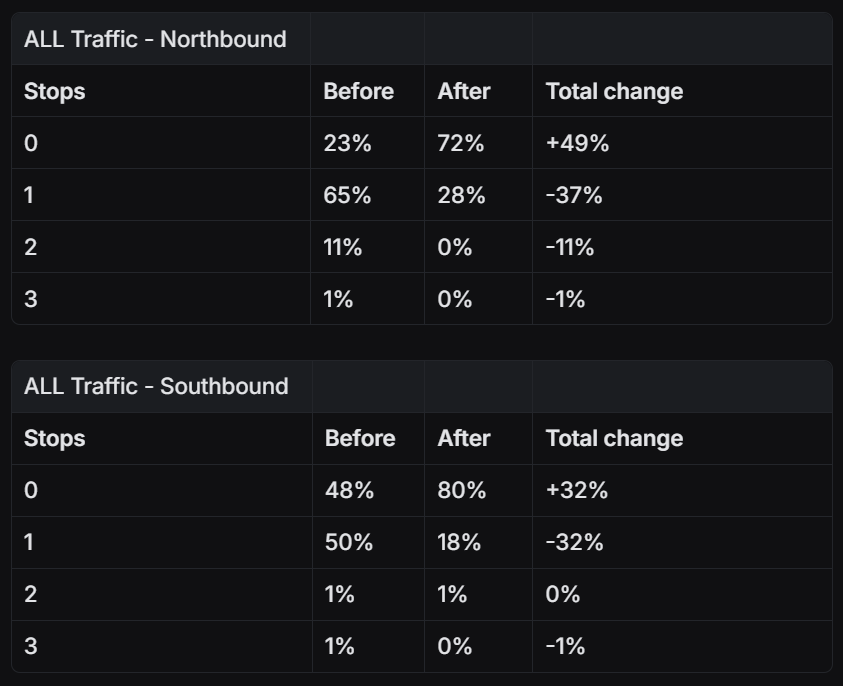
Tables showing the increase in free-flow traffic and reduction in stops after the change.
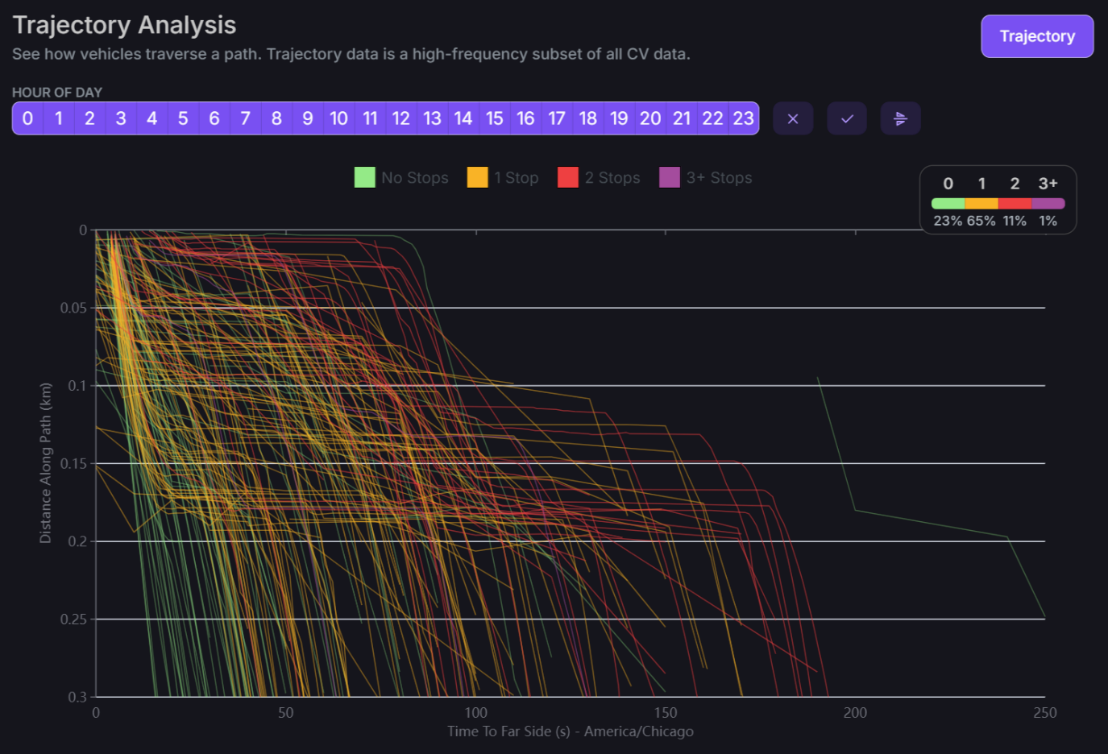
Trajectory graph showing stoppage behaviour for northbound traffic before the change.
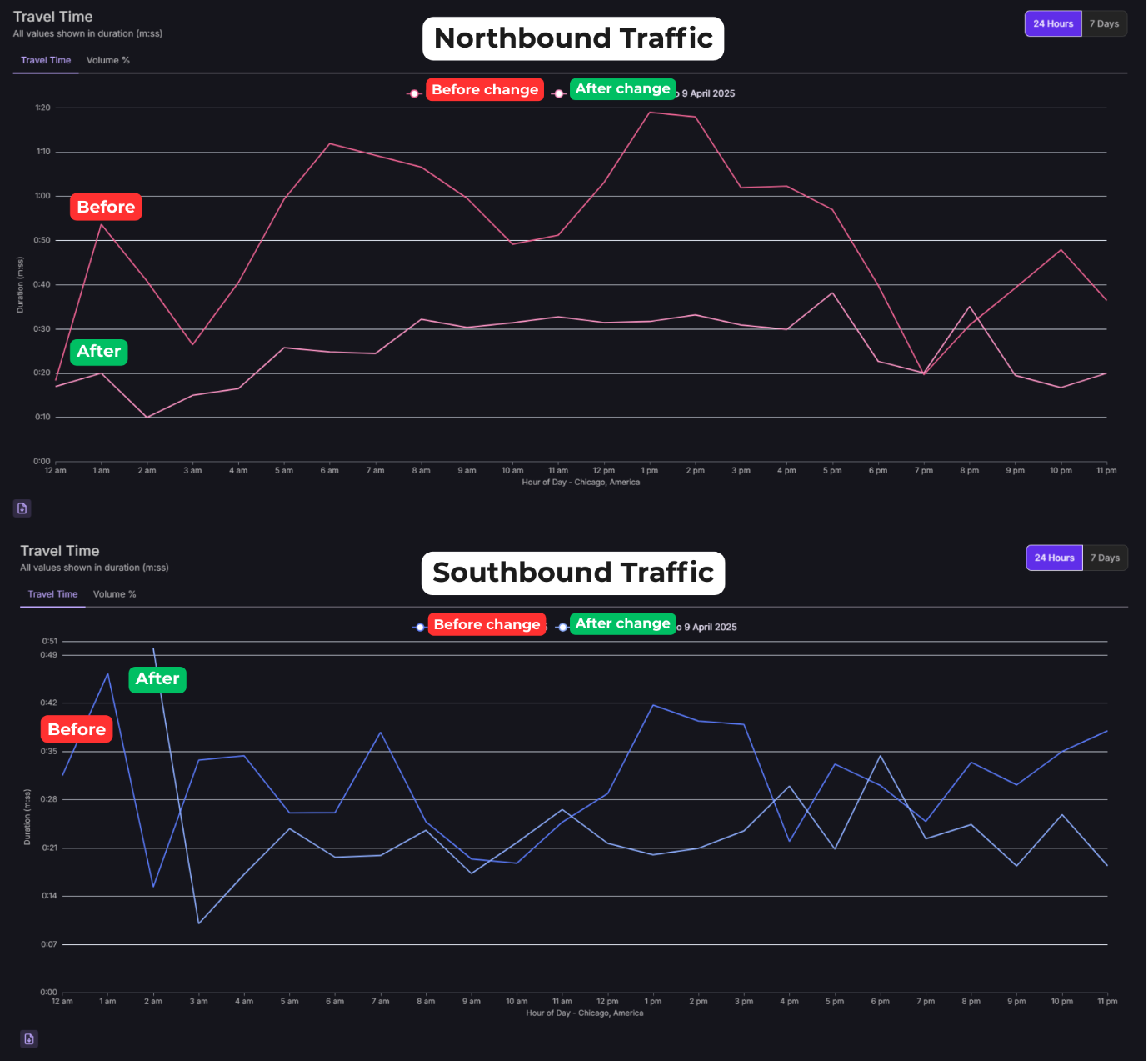
There were also consistent travel time improvements throughout the day for northbound traffic, with a slight decrease from 6-7pm. However, after 7pm, delays and travel times improved, suggesting an unplanned event or remaining construction to be the cause. Southbound traffic had less consistent travel times, with peaks in the early morning and evening, but still with some improvement compared to before.
In the five months (March-August) after the boulevard left turn opened, there was only 1 severe and incapacitating injury, 0 non-severe injuries, and 6 property-damage-only crashes.
The reduction in delays, stops, and crashes helped INDOT to understand the full benefits of installing the boulevard left turn, quantifying the impact across all traffic.